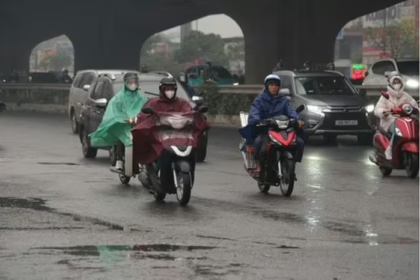
It fell like fire, from nine in the morning until five in the afternoon, crushing everything onto the steaming asphalt. In that heat, eating becomes more complicated than people think, not everything is okay, it’s not always okay.
Hanoi people love hot food. Pho, vermicelli noodles, rice rolls served with steaming broth, that is the culinary language that this city has spoken for hundreds of years. But in the summer, that logic is turned upside down. Sitting in front of a bowl of pho at twelve o’clock in the afternoon, it’s 39 degrees, sweating before the chopsticks touch the noodles, it’s no longer a dining experience, it’s a test of survival.
That’s why Hanoi people, over many generations, have found their own way to adapt.
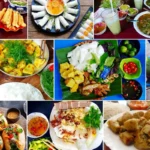
Early mornings are still about pho and vermicelli. When it’s still cool, from six to eight o’clock, beef noodle shops and chicken pho shops are packed with people. Eating hot at this time is still reasonable and pleasant. But after nine o’clock, when the sunlight begins to seep into the brick walls, people move on to something else.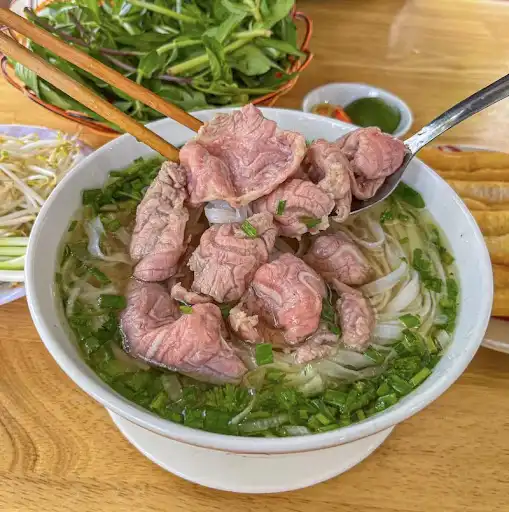 Nam Bo beef noodle soup is one of the best innovations of Hanoi cuisine in the summer. No broth, no hot steam rising to the face, just noodles mixed with sweet and sour fish sauce, stir-fried beef just cooked, crispy roasted peanuts, and all kinds of raw vegetables. After eating, I didn’t feel too full, didn’t sweat, and was full enough to work in the afternoon. That’s why this dish appears everywhere, from Hoan Kiem sidewalk stalls to Cau Giay office canteen.
Banana flower salad is the same. Banana flower sliced into thin strips, mixed with shrimp and meat, and served with sour and spicy water – its delicate taste is like a gentle slap to the senses, waking people up in the midst of afternoon drowsiness. Although sour fish soup is eaten hot, the taste of tamarind, tomato, and pineapple stimulates digestion in a way that no other industrial beverage can.
But if I had to choose one thing that symbolizes Hanoi’s summer, it’s not food, it’s a bowl of sweet soup.
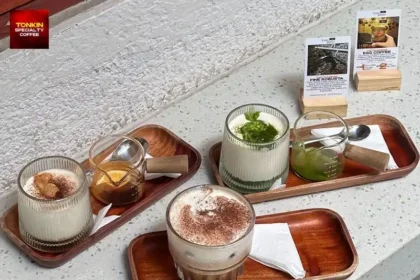
Black bean sweet soup with shaved ice. Mixed sweet soup. Grapefruit tea. They appear from around two o’clock in the afternoon, when the sun is at its harshest, selling in front of the school gate, on street corners, and on carts where the sellers have sometimes been standing in the same place for twenty years. A bowl of shaved ice sweet soup at three o’clock in the afternoon, sitting on a small plastic chair under a bang tree, that is a very Hanoi happiness, no fuss, no reason needed. Sugar cane juice with lemon, pennywort smoothie, coconut water, these three things creep into every corner of Hanoi in the summer. Not because they’re luxurious or trendy, but because they do one thing right: cool down. The body loses water in the sun, needs to replace it quickly, and those do that better than any can of soda.
In the evening, when the sky cools down to thirty degrees, which Hanoians call “cool”, it is the time for carts of grilled corn and onions around West Lake. The fragrant smell of fried onions in the afternoon breeze, golden grilled corn, eating while blowing in the wind, that feeling cannot be bought in any air-conditioned restaurant.
Summer in Hanoi is harsh, but people still eat well. Not because they don’t feel the heat, but because they have learned to eat according to the seasons and the rhythm of the city. That is the wisdom accumulated over many generations, not found in books, only in the taste memories of people who grew up here.
Here it is, there’s enough content.“Hanoi in motion”: new name, new rhythmFrom today, audiences familiar with the “Special News” program of the Hanoi Newspaper and Radio and Television Agency will see another name appear on the screen: “Hanoi in motion”. This change is more than just a renaming, it marks a shift in the way a political current affairs program positions itself.
The program launched on February 22, 2026, the 6th day of the Year of the Horse, with the theme “Going ahead, taking the lead, serving for the people”. Initially, only a few were distributed each week, but the attraction came faster than expected. The frequency gradually increased, from two to three episodes per week, until mid-March 2026 when it completely switched to daily broadcasting, each episode lasting 60 to 90 minutes in the time frame of 7:00 p.m. to 8:00 p.m.
What makes the show stand out is not the speed, but the approach. Instead of reading the news in the traditional way, “Special News” chooses to go in-depth and analyze the city’s major issues through in-depth discussions, field reports, and direct connections with the grassroots. Topics such as Resolution No. 02-NQ/TW on Capital development in the new era, Capital Law 2026, or 100-year vision planning are dissected in many dimensions. Besides, there are issues closer to people’s lives: site clearance, urban railway, old apartment renovation, digital transformation, and basic healthcare.
The name “Moving Hanoi”, according to the explanation of the Hanoi Newspaper and Radio and Television Agency, wants to better reflect the rhythm of the city at this time, dynamic, innovative, not standing still. The program still maintains the same time frame and broadcast frequency, is still on TV channel 1 and FM 96, is still posted in parallel on hanoimoi.vn and digital platforms, and is still summarized in print newspapers the next day.
More than three months from debut to name change, not long, but enough for the program to prove itself that it has an audience. The rest is keeping it that way.
PV