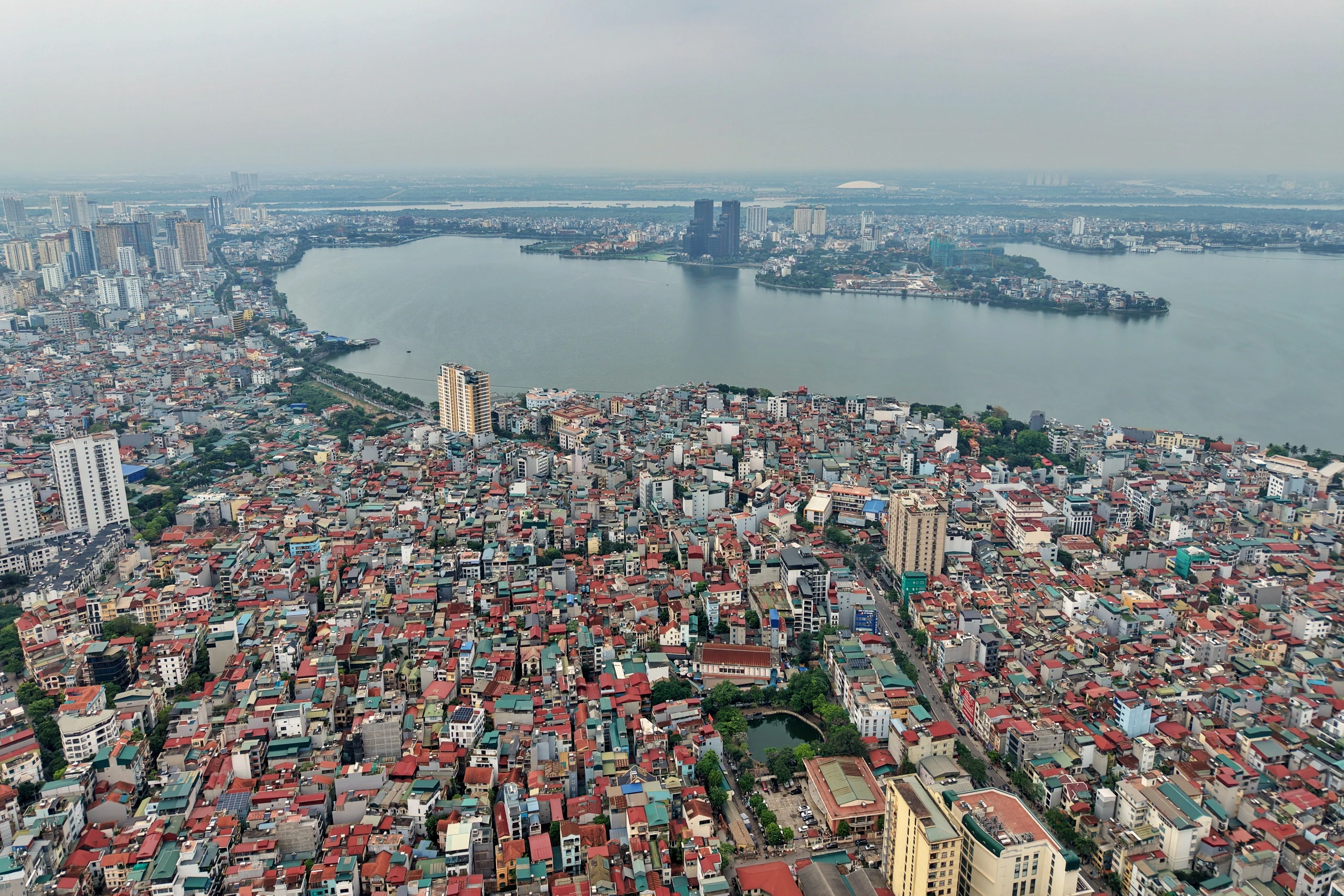
According to the draft, urban reconstruction is understood as investment in construction and development of new urban areas on the basis of old works that have been demolished or are no longer effective in use, with diverse scales. This activity is implemented according to each specific project, which can be a project to reconstruct a single urban area or a mixed renovation, embellishment, or reconstruction project. The area selected for reconstruction must be within a residential unit, ensuring balance between technical and social infrastructure in accordance with the approved zoning plan.
To determine an area eligible for a reconstruction project, Hanoi proposed four types of criteria: First, areas that do not ensure traffic connection according to fire prevention and fighting requirements.
The second is the area where the headquarters of agencies and units with many users does not meet fire prevention and fighting standards without a thorough solution.
Third is the project to renovate one or more street blocks or planning plots approved by the Hanoi City Party Executive Committee.
Fourth is a project on the list approved by the City People’s Council to serve the goal of urban reconstruction according to planning.
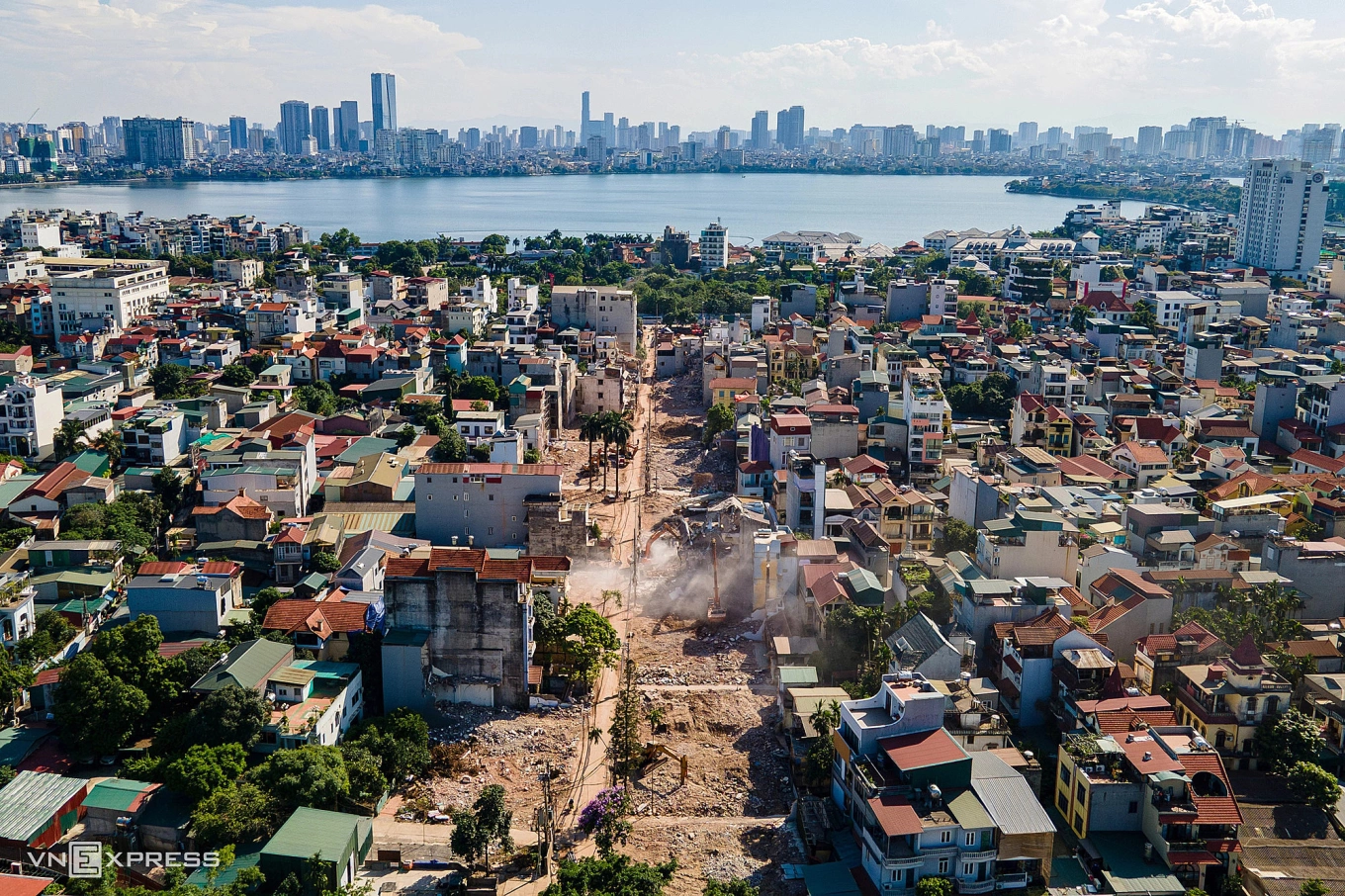
The draft also requires the City People’s Committee to publicize areas that need to be renovated, with information on location, expected boundaries and planning and architectural criteria based on the approved Master Plan of the capital.
For projects serving social infrastructure and public works with no residential purpose, home owners and users of confiscated land are given priority to be considered for compensation in the form of resettlement residential land on the basis of balancing the city’s land fund. For urban area reconstruction projects with residential purposes, people whose land is recovered are given priority for on-site resettlement, unless the investor has another plan approved by the competent authority to ensure financial efficiency. People who are eligible for resettlement but do not need to buy a house, or are not eligible but have difficulty finding accommodation, have the right to choose to buy, rent or lease-purchase social housing without having to draw lots and without meeting the usual conditions on subject, housing or income.
While waiting for resettlement arrangements, people whose land is recovered will be considered for temporary residence from the city’s housing fund. If there is no housing fund to arrange, the city will support all house rent during the project implementation period but up to three years; From the fourth year to the end of the fifth year, each party shall bear half; From the sixth year onwards, the investor bears all rental costs. The duration of temporary residence support must not exceed the approved project implementation time. The investor is also responsible for paying all costs of management and operation of resettlement and temporary apartment buildings throughout the period of using the city’s housing fund. In case the person whose land is recovered takes care of his/her own temporary accommodation, the investor shall pay in cash at an amount not lower than the current site clearance policy regulations in the area. In addition, the draft also proposes many additional mechanisms such as bonuses for site handover progress, support for stabilizing production and business, changing careers and finding jobs.
The entire above policy is built in the context of the Hanoi Capital Master Plan with a 100-year vision that identifies urban restructuring as one of the key tasks, with a multi-polar, multi-center development model to reasonably redistribute population and infrastructure. The planning sets out specific requirements to expand the renovation and reconstruction of Belt 1, Ring 2 and Ring 3 areas, aiming to improve urban quality, ensuring a living environment and long-term livelihoods for people.
PV